Panic Hardware Doors: Parts, Alarms and Installation Questions
A panic device lets occupants release a door from the exit side by pushing its bar or touchpad. The correct assembly depends on the door, occupancy, fire rating and applicable requirements.
This guide explains common exit-device types, how alarms differ from locking functions and what to confirm before installation. Have the door details and existing hardware available when discussing an assessment and estimate.
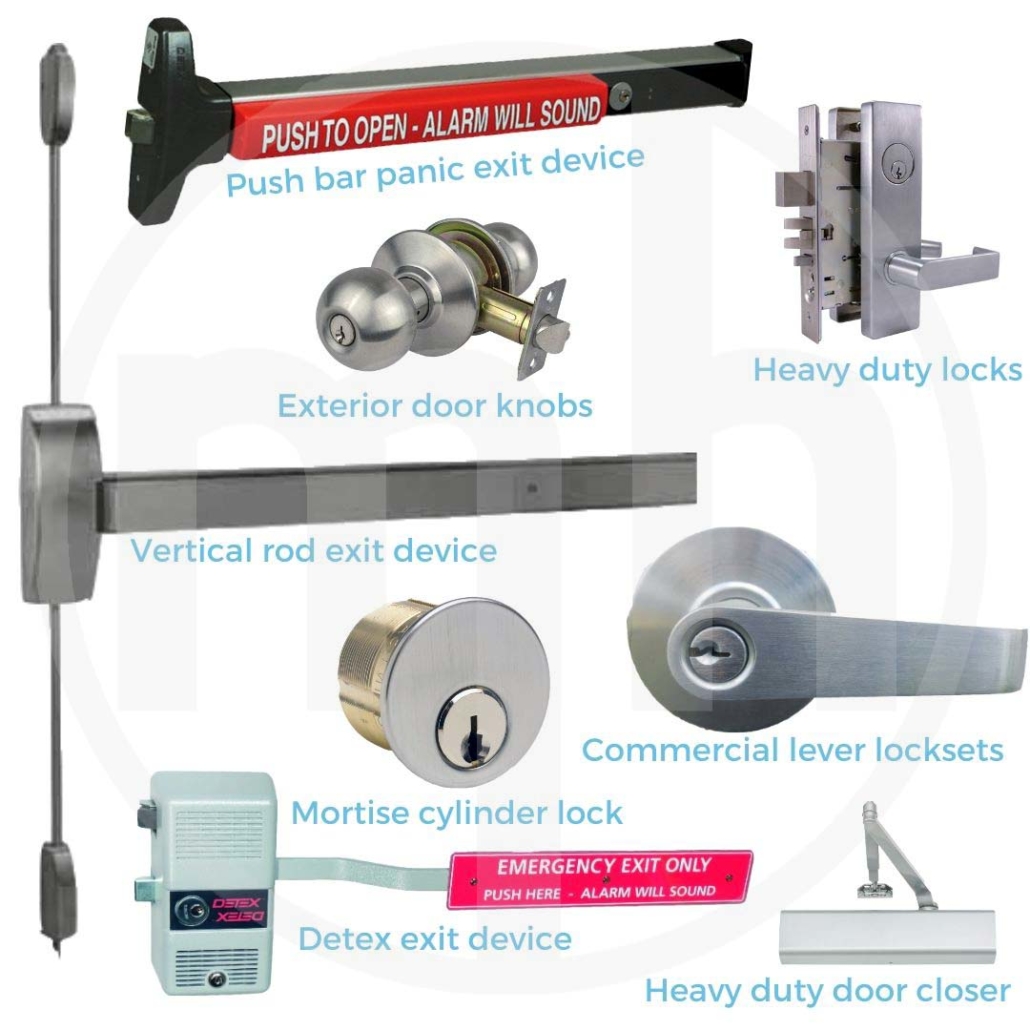
Commercial Panic-Door Hardware Parts
Rim exit devices and concealed vertical-rod devices, including products offered by Von Duprin, use different latching arrangements. The device, strikes, trim, door and frame must work together. Allegion distinguishes panic hardware from fire exit hardware: a fire-rated opening requiring an exit device needs the appropriately listed fire exit hardware. Mechanical dogging, which holds the latch retracted, is not a feature of fire exit hardware. Confirm the exact listed assembly before changing parts.
Confirm Requirements Before Installation
Ask the local authority responsible for the building’s fire and building-code requirements to confirm the applicable rules, permits and inspections. A locksmith assessment or new panic bar does not by itself certify compliance. OSHA’s workplace exit-route rule, 1910.36(d), requires inside opening without a key, tool or special knowledge and prohibits devices or alarms whose failure could block emergency use. Specialized controlled-egress arrangements need specific review.
For an assessment request, call (720) 248-8087 or request an estimate. Confirm supported work and availability. The estimate depends on door type, rating, device, trim, electrical connections and any related door or frame work.
Exit Devices with Alarms
An exit alarm reports or discourages door use; by itself it does not create a one-way door or prevent entry. Exterior access depends on the trim and locking arrangement. Confirm the alarm’s power, monitoring, signage and response procedure while preserving required exit operation. Delayed-egress or access-control equipment is a separate design question requiring review of the applicable rules and approved assembly.
Mile High Locksmith® · Panic-hardware guide
Start with the door, its rating and its exit function.
Have the door location, existing device and any fire-rating label ready. Request an assessment of the supported hardware and installation scope.
Understand your optionsConfirm the detailsChoose your next step
Service hours: Daily, 6 AM–10 PM. Confirm availability and supported work before booking.
Share this entry
 Emergency Door Lock Solutions by Mile High Locksmith